
Kinship: The Legacy of Gallery 7
By Abel Gonzàlez Fernàndez

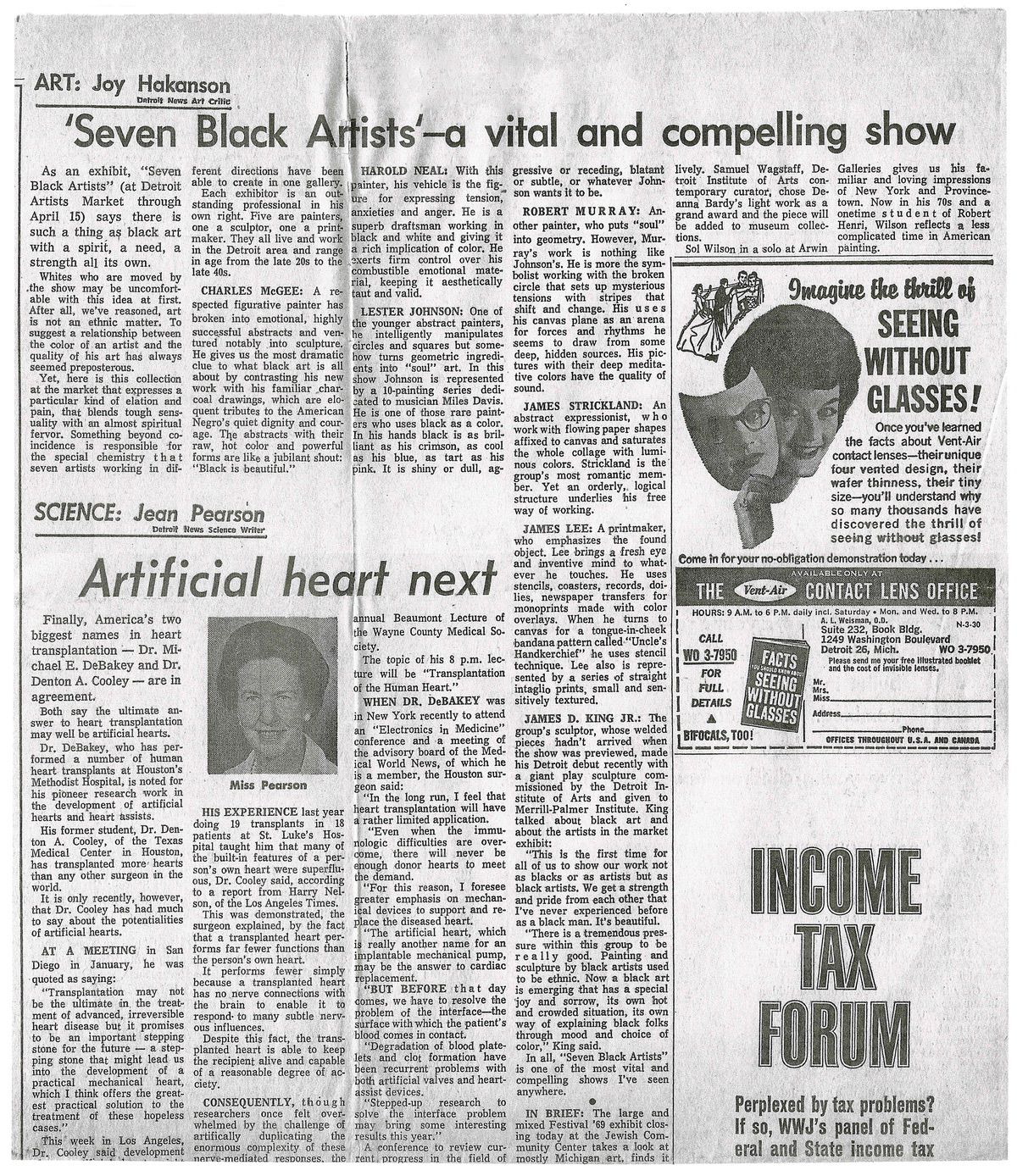
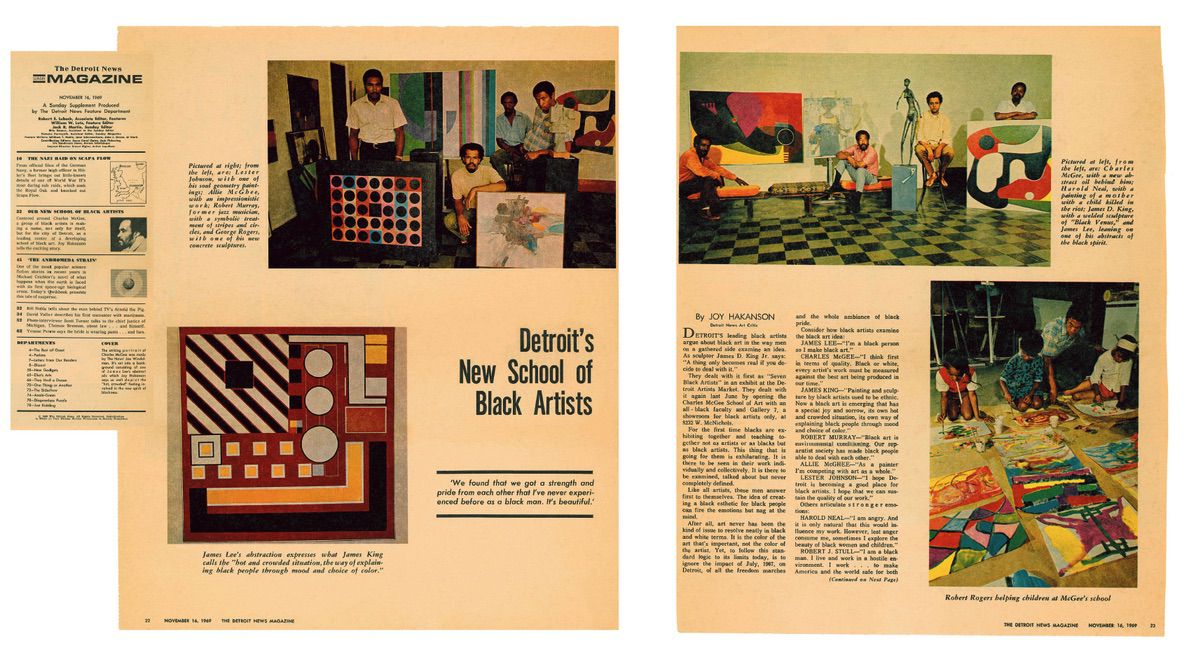
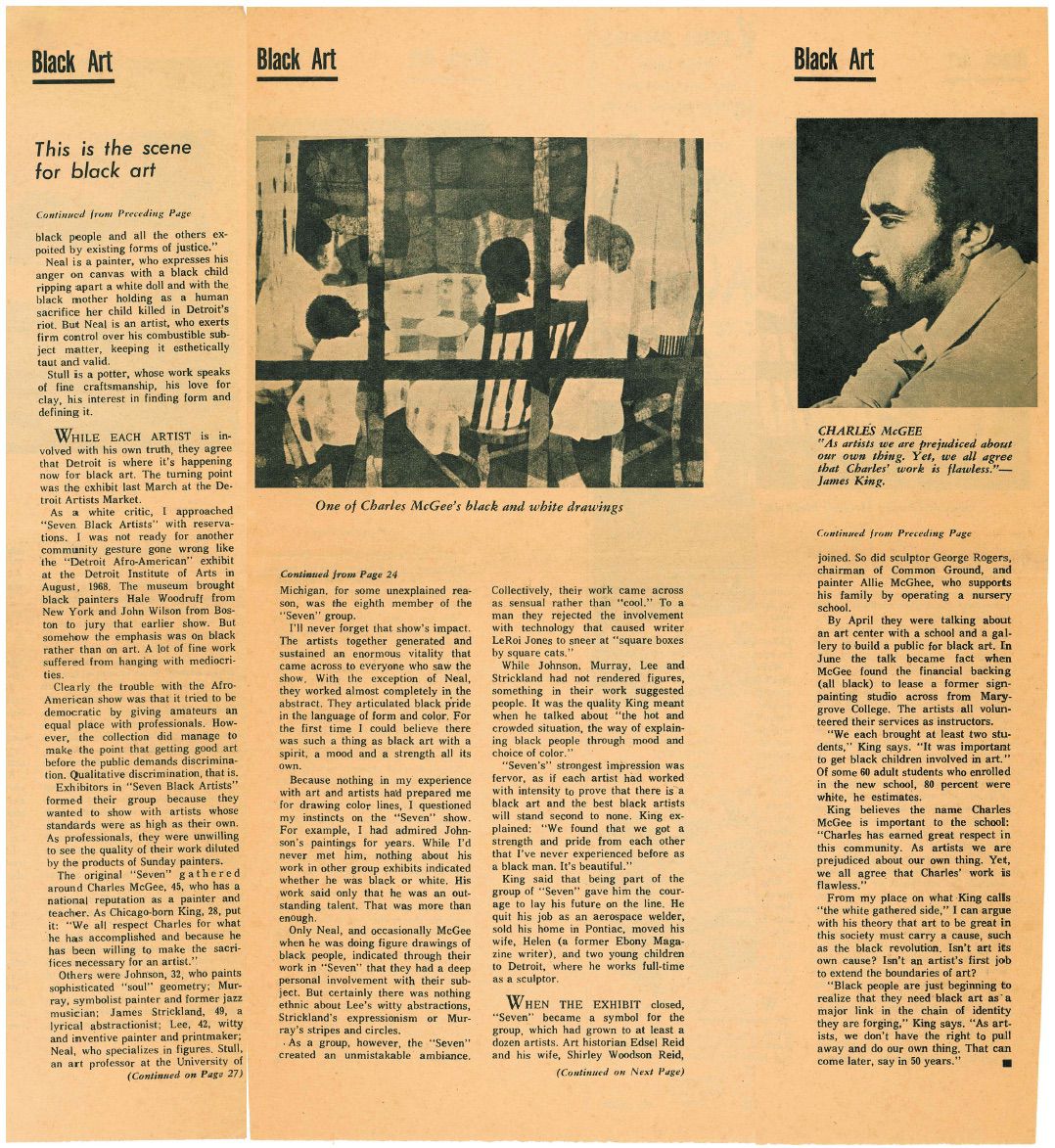
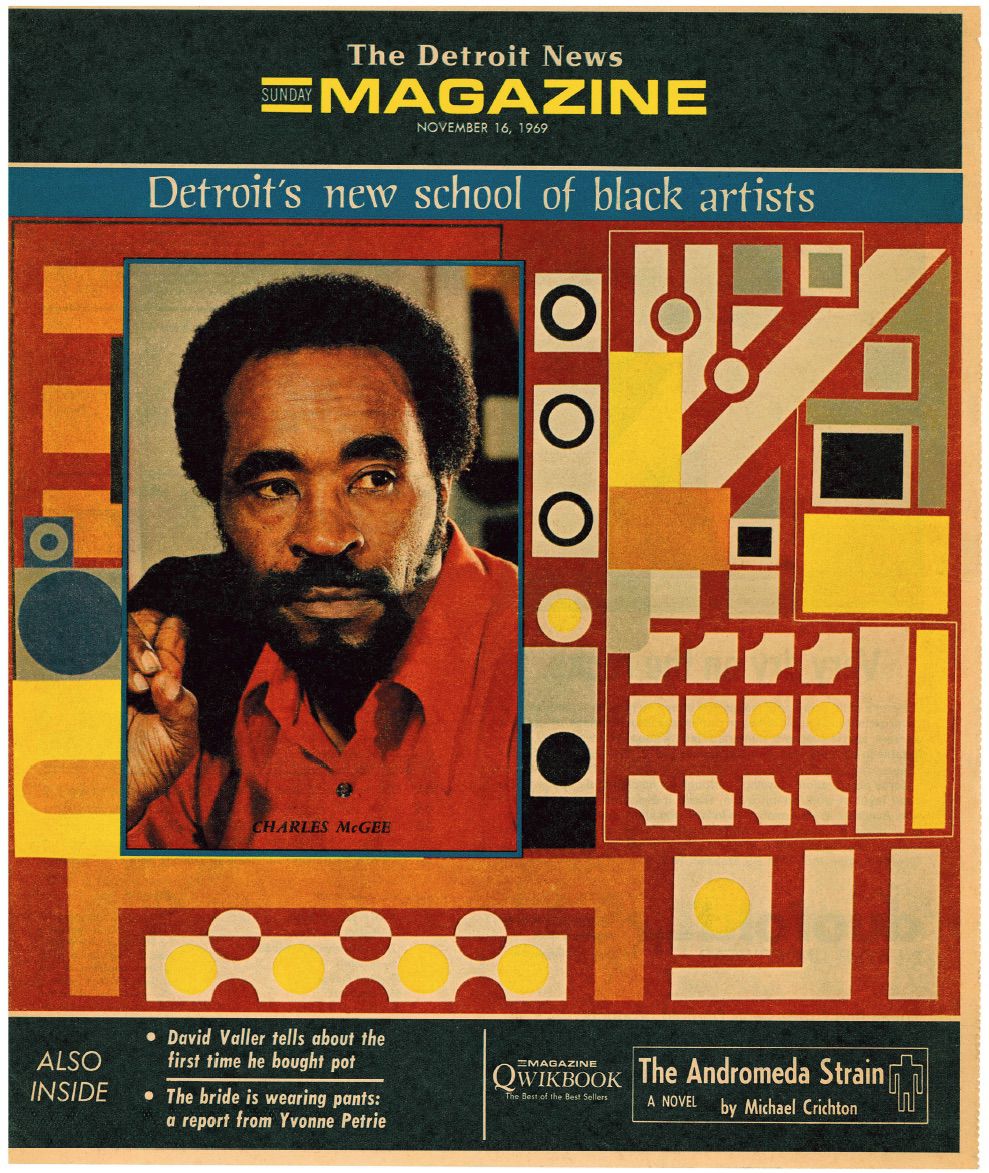
Joy Hakason, “Detroit’s New School of Black Artists,” The Detroit News Magazine, November 16, 1969, 22-28. Courtesy of Detroit News.
In 1969, Gloria Whelan, Director of Detroit Artists Market (DAM), the longest-running contemporary art nonprofit in the Midwest, asked artist Charles McGee to organize an exhibition dedicated solely to the work of Black artists. The exhibition occurred in the aftermath of the 1967 Detroit uprisings, when the state and federal government deployed more than 7,000 National Guard and U.S. Army troops to police Black neighborhoods in the city.
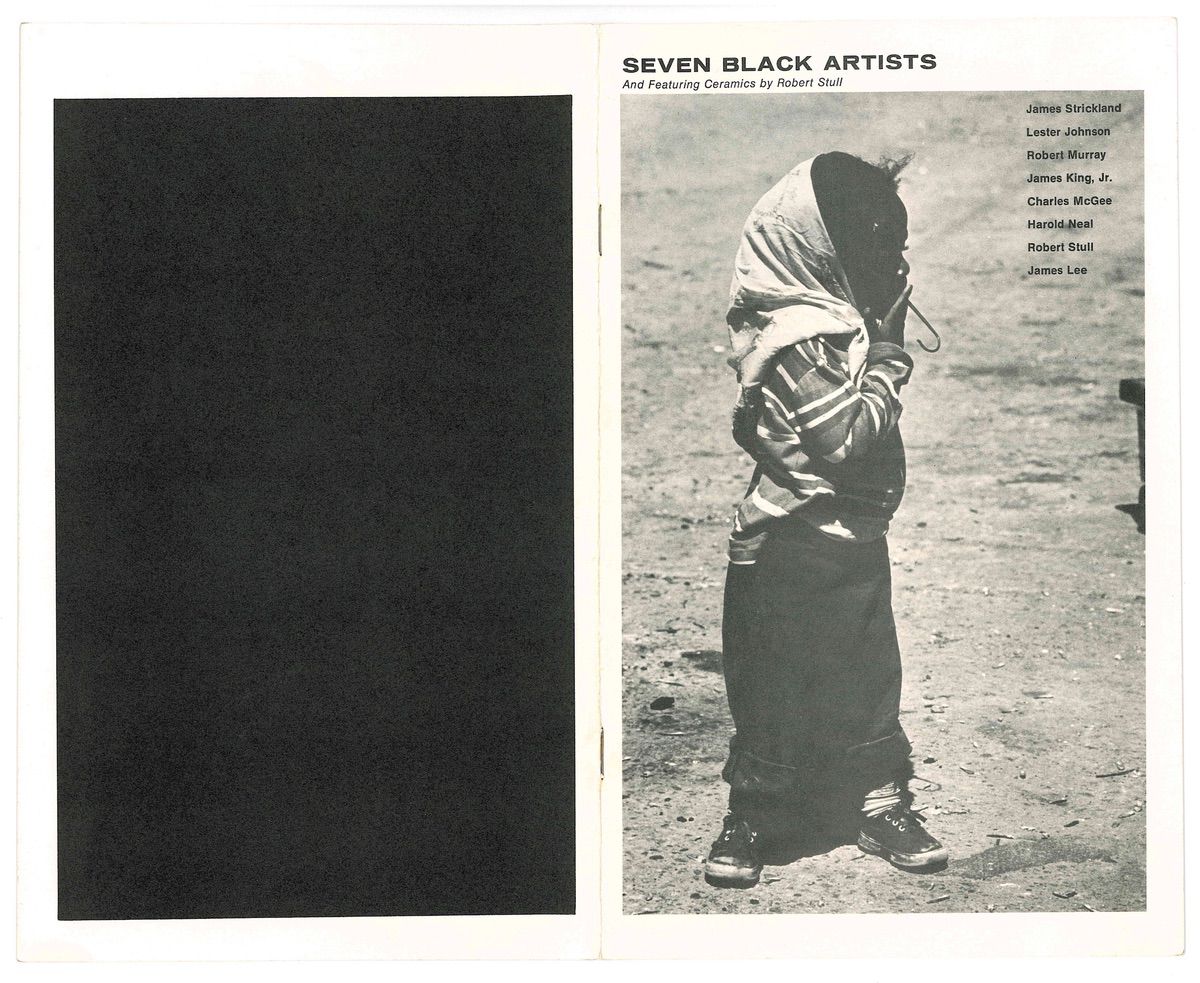
The uprising followed a national and institutional reckoning for racial equity1 in alignment with the political claims of the Civil Rights era and the emerging Black Power Movement,2 which encouraged Black American communities to reconnect with their African roots. McGee responded to DAM’s call with the groundbreaking exhibition Seven Black Artists (1969), which featured the work of artists James Dudley Strickland, Lester Johnson, James King Jr., Robert Murray, James Lee, Harold Neal, Robert J. Stull, and McGee himself.
The curator included this roster of young Black artists working predominantly in abstract painting, in contrast to the social realism popular amongst many artists in the Black Art Movement. For McGee and this group of artists, abstraction was a universal language that could ensure a permanent dialogue with the artistic canon, taking as its starting point the abstract patterns of ancient West African masks, the colorful textiles, and the energy of Jazz.
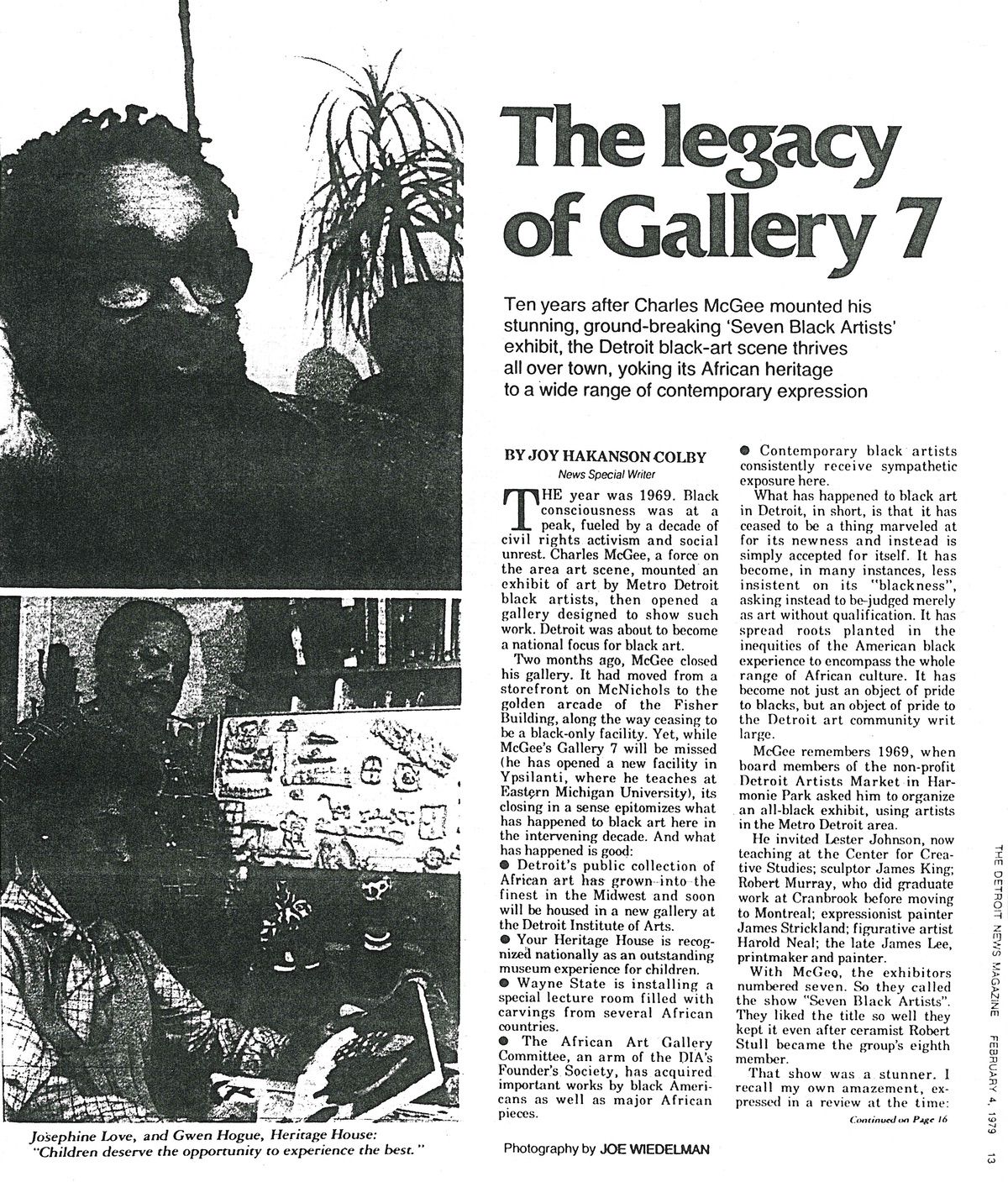
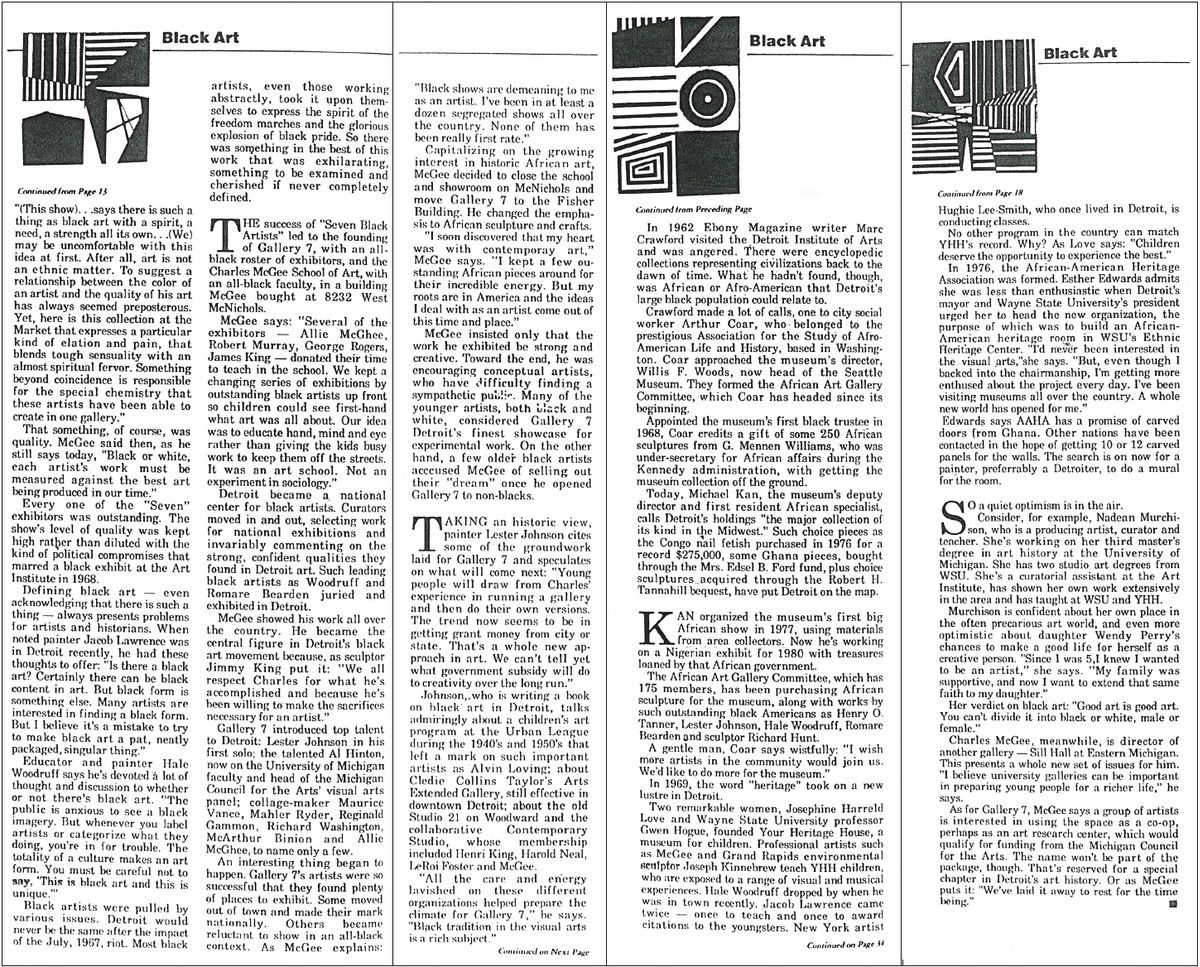
The positive response to Seven Black Artists, coupled with McGee’s artistic success and his commitment to the city, made it possible for McGee to found Gallery 7,3 an artist venue committed to abstract and minimalist art experimentation, exhibiting and operated by Black artists. Even though Gallery 7 was not the first Black artist-run initiative in Detroit,4 the gallery denoted a significant shift in Detroit’s artistic discourse and community. Black artists, who were not invited to present at historically white institutions and art museums, created their own institutions on their own terms.
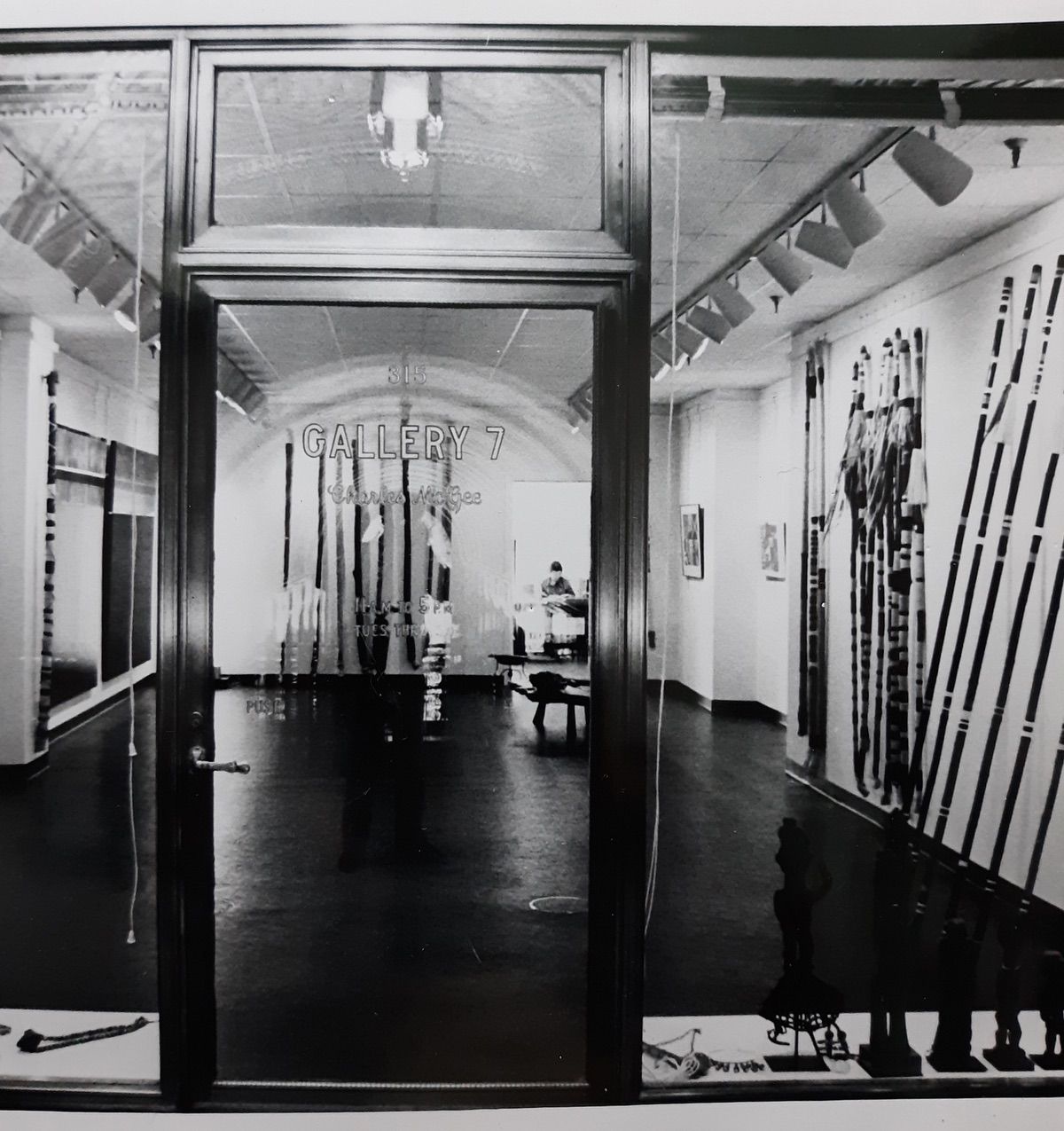
Inspired by national liberation movements throughout the Global South, the Black artistic community in the USA debated how art should serve and be committed to political struggle. Such conversations gave rise to the ongoing dichotomy between social realism, subject matter representation, and abstract art, which is considered more personal and imaginal. At Gallery 7, McGee and his cohort were committed to the liberation, autonomy, and agency of Black communities. Shown in the exhibition titled Seven Black Artists, Harold Neal’s artwork Rag Doll (c. 1967-69), which depicts a Black man breaking a white doll, engages with the impact and emotional processing of communities that had been repressed during the uprisings in Detroit. This is one of many works presented that described the emotions of Black communities while imagining a future consisting of abstract patterns, colorful compositions, and semiabstract canvases. This drew a line of diversity and aspirations of Black communities without the erasure of the systemic violence inflicted upon them.
Lester Johnson: Spirits of the Dreamtime
One of the exhibitions that embodies the energetic, stylistic, and ideological sense of Gallery 7’s legacy is Spirits of the Dreamtime (1975), a solo show by artist Lester Johnson. Located at the Fisher Building, the artworks displayed consisted of street-found tree branches and industrial poles wrapped in vegetal fibers and textiles. The works in this exhibition drew inspiration from the piece The Sorceress and the Dreamtime Spirits (1974), originally exhibited at Michigan Focus at the Detroit Institute of Arts in the same year and reappearing in Kinship. The Sorceress and the Dreamtime Spirits was the first of a series of works in which Johnson will rehearse what we call today postminimal art, substituting street-found tree branches for industrial wood poles from an army surplus store and wrapping them with African pattern textiles and vegetal fiber. This way, in the words of Lester Jonshon, he would “combine the overlapping of the American celebration of industrial minimal art, with his Pan-African legacy, creating a hybrid product” in a hinterland of identity between ancestors and urban present.
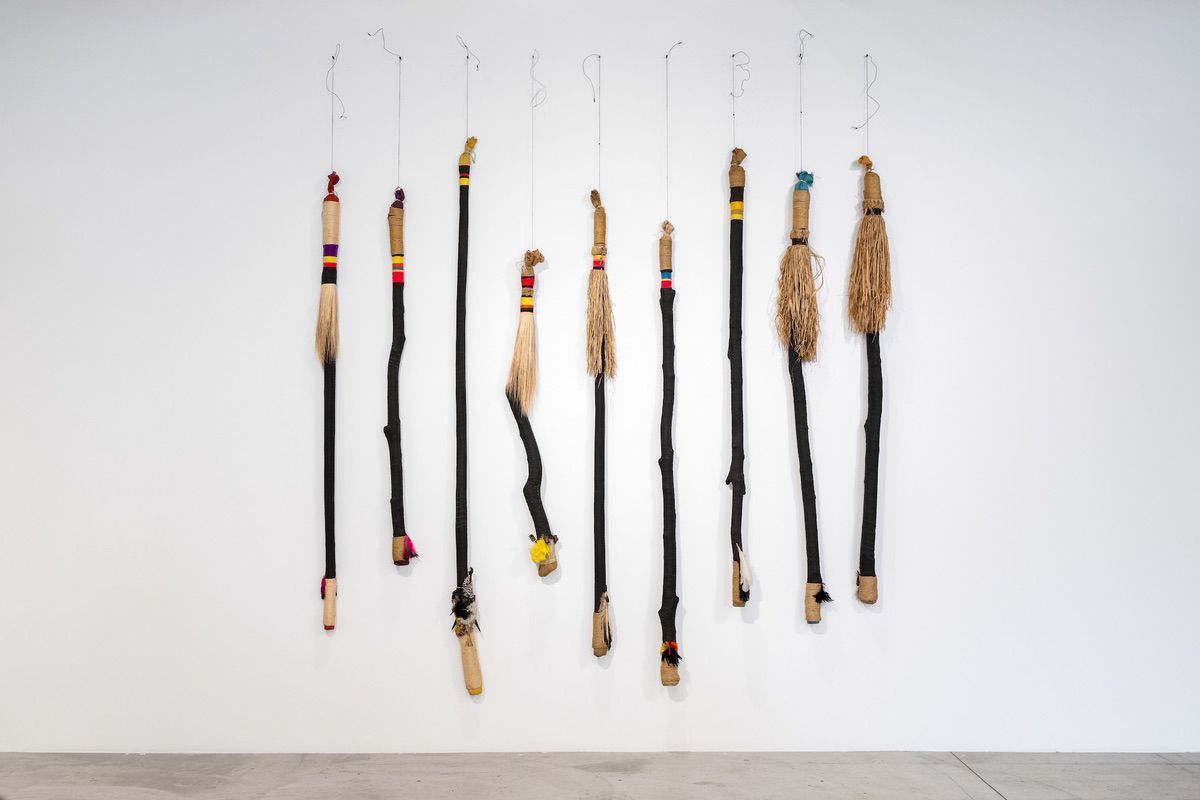
In West African cultures, the practice of wrapping objects in fabric and vegetal fibers seeks to preserve the energy and ceremonial meaning of some objects used as permanent attributes of Yoruba gods. Johnson intentionally referenced these practices, this time approaching the remains of industrial capitalism as sacred objects. In 1966, the exhibition that launched the minimalist art movement, Primary Structures, opened in New York City. It provoked a formal and ideological turn in American art towards linguistic formalism, finding the essence of contemporary art in industrial materials. This search by Lester Johnson and other members of Gallery 7, like Allie McGhee and Charles McGee, was essential and universal. The references they used to celebrate minimal forms included the geometrical industrial parts and something more ancient: the geometric patterns of African masks, textiles, and utilitarian and ritual objects. For artists like Allie McGhee, the language of these objects conveys a universal mode of communication and cultural transmission among humans, approaching Africa as the starting point of a global civilization.
Kinship
While presenting various and diverse practices at Gallery 7, the notion of kinship emerged among the artists who exhibited there and spread to other contemporary artists who followed. Kinship should be understood here as the shared space between chained geometrical figures; everything is part of each other. Additionally, like in abstraction, kinship affective linkages offer infinite possibilities and ramifications, escaping any definition or fixed identity, a value with which many of the artists in contact with the legacy of Gallery 7 would agree.
Some of these kinships, shaped by Gallery 7’s impact, could be traced to the professional development of some artists in the city. After exhibiting his work in Spirits of the Dreamtime in 1975 and the Detroit Institute of Arts in 1974, according to Lester Johnson, these exhibitions facilitated his hiring as a professor at the College for Creative Studies (CCS), where he exercised his practice combined with the education of the new generation of Detroit’s artists for 35 years.
At CCS, during the 80s, Johnson became friends with Gilda Snowden, a young colleague and professor whose early work similarly engaged with totemic objects, as presented in this exhibition. Even though Snowden never showed her work at Gallery 7,5 her interest in the tension between abstraction and figurative painting persisted in her work, expanding her personal identity from the self-portrait to the complex figure of a Tornado. In Snowden’s words: “Abstraction is not absolute. There are varying degrees depending on the distance traveled between realism and non-representation. Traditionally, realistic images, such as the landscape or the portrait, may be extrapolated by an artist until the subject becomes unrecognizable.”6
As an undergraduate student at the University of Michigan in the 1970s, the artist and designer Elizabeth Youngblood attended a lecture by McArthur Binion, a recent MFA graduate from Cranbrook Academy of Art. Binion, who had one of his first solo exhibitions at Gallery 7 in the 70s,7 inspired Youngblood to pursue her studies at Cranbrook as a designer (1974-75). At the same time, she gained proximity to Gallery 7’s work, which became a formative space for learning, thinking, and making. In her persistent exploration of shapes, lines, and colors, Youngblood has been searching for the meaning of black grids, lines, and other shapes in the vastness of the plane. The minimalist shapes in her practice establish a dialogue with the art of Naomi Dickerson, a conceptual, abstract Detroit practitioner who remains a mystery in Detroit art history. Her work, acquired by the DIA in 1975 and by the University of Michigan Museum of Art (UMMA) in 1982, shows a conceptual practice in which the minimal unit of abstraction–black lines on a plane–becomes an exploration of Blackness as a potential formal language (Second Score for Black Opera, 1979). It seems that Youngblood and Dickerson’s ultimate intention was to create an alphabet of structural abstract forms that compose a language for artistic expression of Blackness.
Despite being predominantly male, the Gallery 7 group encouraged an artistic search for abstraction, and Dickerson’s work was a radical example that overlapped with the years of the gallery. Youngblood and Snowden continued this conversation, adding a feminist perspective, abstracting their bodies through self-portraits (Album, 1989) and materials such as wire and porcelain (Lean, 2015).
In the work Brotherhood (c. 1980s), presented in Kinship, Harold Neal describes Blackness as an abstract and mutable composition. The painting reads: “A regreening of Blackness, like an arrogant dandelion existing itself into existence through the concrete sidewalk.” Blackness here is equated to color and life, a vital organic cycle produced under duress. The legacy of Gallery 7 reveals the impact of a group of artists in Detroit who encouraged many others to thrive, create, endure, and inspire beautiful images as a repository for Black life.
References/Footnotes
1 To learn more about the implications of American racial politics on Art Institution practices, see Bridget R. Cooks, Exhibiting Blackness: African Americans and the American Art Museum (Amherst: University of Massachusetts Press, 2011).
2 Allie McGhee’s work, All Time (1967), presented at Kinship, is a mixed-media collage depicting some of the foundational figures of Black Power, such as Malcolm X and Martin Luther King. The composition resembles the political turmoil of the time, bringing Black faces together with vibrant expressions next to American soldiers, and American flags in the background.
3 Gallery 7 had two main venues. From 1969 to the early 1970s, the gallery was located at 8232 W. McNichols Avenue, across from Marygrove College, in a building owned by Charles McGee. From there on, the gallery moved to the Fisher Building until 1979, consolidating as one of the most prestigious art galleries of the period.
4 Dr. Cledie Taylor founded the Arts Extended Group in the early 50s, including an art exhibition. In 1956, Dr. Taylor opened the first gallery owned by a Black person in Detroit, showing predominantly Black artists. See Julia R. Myers, Energy: Charles McGee at Eighty-five (Ypsilanti: Eastern Michigan University, 2009), 9.
5 Naomi Dickerson and Elizabeth Youngblood were not presented at Gallery 7 during its time.
6 Guilda Snowden quoted at Dick Goody, Gilda Snowden album: a retrospective 1977-2010 (Oakland University Art Gallery, 2010), 3.
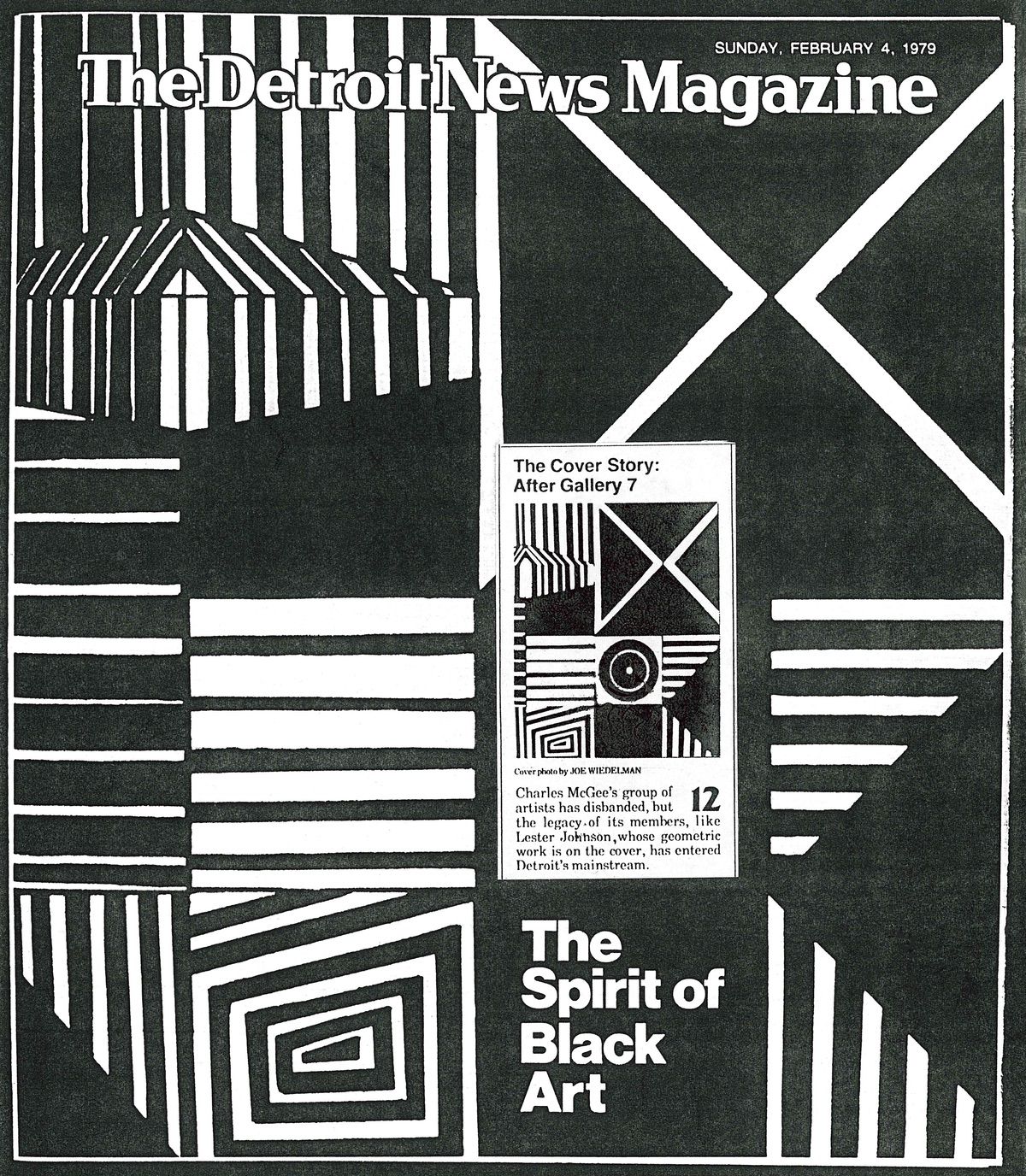
7 Joy Hakanson Colby, “The Legacy of Gallery 7”, The Detroit News Magazine, February 4, 1969, 13.
